What island beaches are really like when you experience them by cruise
When travelers look up “beaches in Halong Bay,” many picture long sandy beaches near the city or resort-style shores with sunbeds and cafés. That expectation often changes once they step on board a cruise.
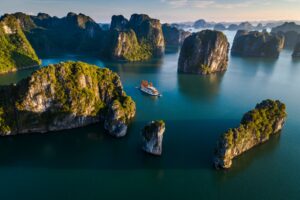
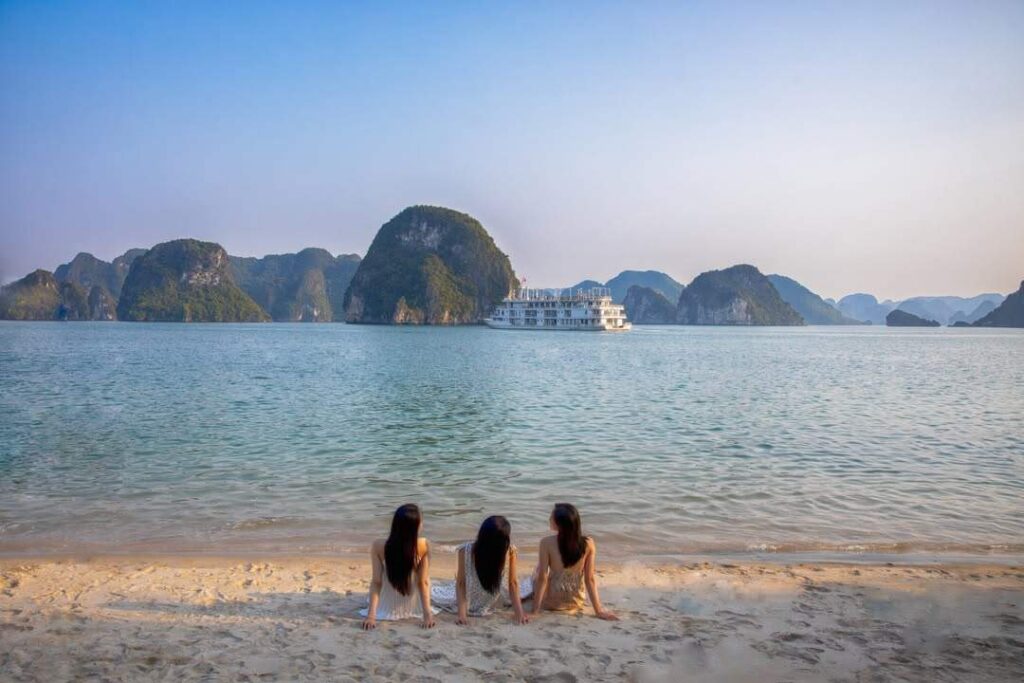
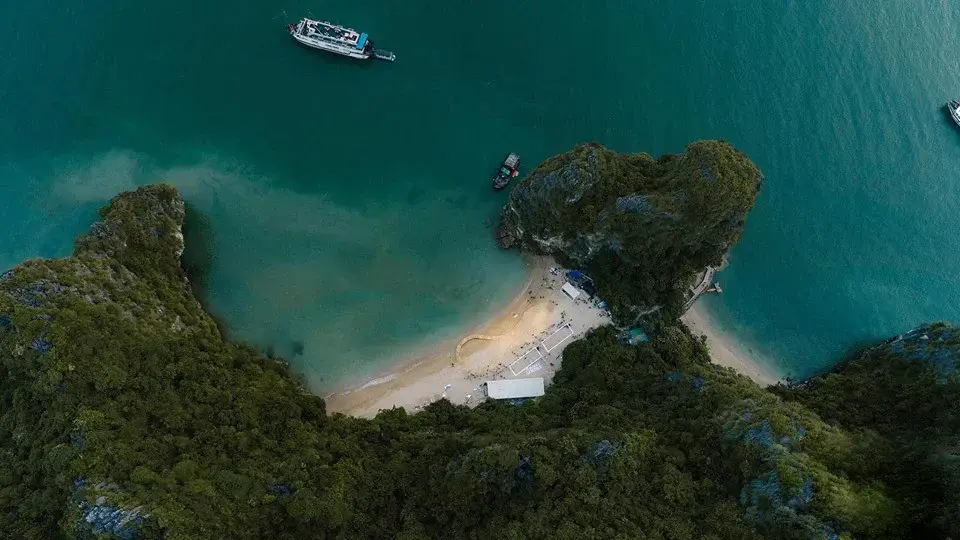
In reality, the beaches you experience on a Halong Bay cruise are island beaches, not mainland beaches. They are small, natural stretches of sand hidden among limestone islands, accessible only by boat, and visited as part of a carefully planned journey across the Bay.
This article focuses on cruise-access beaches only—the beaches guests may actually visit while cruising in Vịnh Hạ Long and Bái Tử Long Bay—not beaches located on land.
Cruise Beaches vs Mainland Beaches in Halong Bay
Before exploring specific beaches, it helps to understand how cruise beaches differ from mainland ones.
Mainland beaches in Halong city as Bai Chay beach, Tuan Chau beach or Hon Gai beach
- Easy to reach
- Designed for long stays
- Supported by hotels, restaurants, and facilities
Cruise beaches, by contrast:
- Are located on small islands within the Bay
- Can only be reached by tender boat or kayak
- Have no commercial services
- Are visited briefly, usually 30–60 minutes
A cruise beach is not a place to spend half a day. It is a moment within the journey—a pause to swim, relax, and experience Halong Bay at water level, surrounded by limestone cliffs.
What Cruise Beaches Are Actually Like
Guests are often surprised by how simple and peaceful cruise beaches feel.
Most share similar characteristics:
- Small to medium size
- Sheltered water with gentle conditions
- Natural sand and rocks
- No shops, bars, or loud activities
Typical activities include:
- Swimming close to shore
- Sitting or lying on the sand
- Taking photos or enjoying the view
- Kayaking nearby, depending on the location
The appeal lies not in facilities, but in atmosphere—being on a quiet island beach in the middle of the Bay, even if only for a short time.
Cruise Beaches in the Central Area of Halong Bay
Titop Island
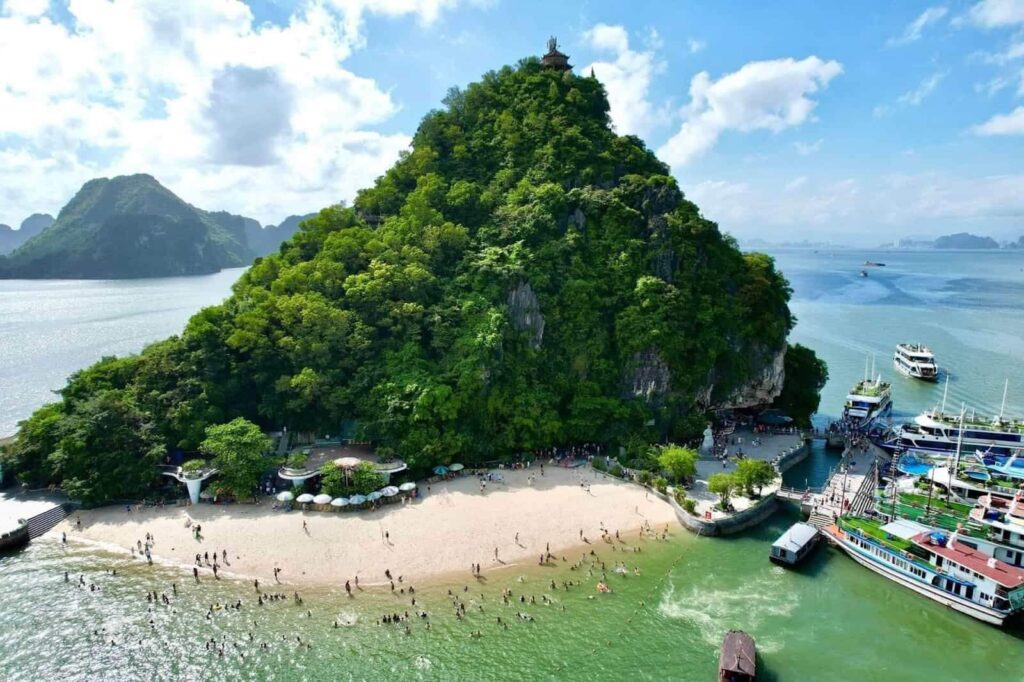
Titop Island is the most famous cruise beach in central Halong Bay and a classic stop for many first-time visitors.
What guests experience:
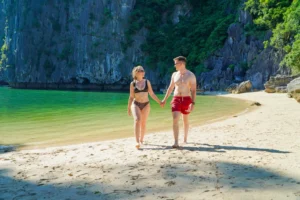
- A crescent-shaped sandy beach suitable for swimming
- Calm water in normal conditions
- A lively, energetic atmosphere, especially in the afternoon
Titop is unique because it offers two experiences in one stop:
- Beach time
- A short hike to the island’s viewpoint, revealing one of the most iconic panoramic views of Halong Bay
It is important to note:
- Titop can be crowded during peak hours
- Beach time is usually limited to 30–45 minutes
- The atmosphere is vibrant rather than secluded
For many travelers, Titop represents their first close connection with the Bay’s landscape.
Trinh Nu Cave Beach Area
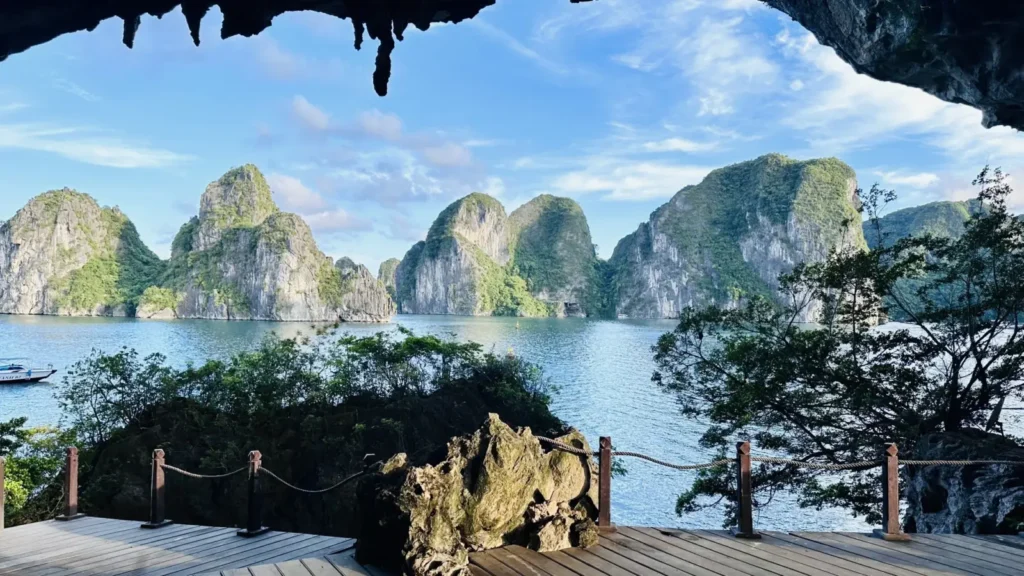
Near the Trinh Nu Cave area lies a small, natural beach used by some cruises as a combined swimming and kayaking stop.
Compared to Titop, this area feels:
- More enclosed
- Quieter
- Less affected by passing boat traffic
Guests often enjoy:
- Gentle swimming in sheltered water
- Kayaking along limestone walls
- A slower, more relaxed break between sightseeing stops
This area is particularly appreciated by guests seeking calm moments rather than busy highlights.
A Note on Soi Sim Island
Soi Sim Island was previously known as a quieter alternative to Titop.
At present, Soi Sim is not operating as a regular swimming beach, and most cruises do not include it as a beach stop.
This is an important detail, as some older itineraries and online articles may still reference Soi Sim as an active beach.
Cruise Beaches in Bai Tu Long Bay: Quieter and More Natural
Travelers looking for a more tranquil experience often choose itineraries in Bai Tu Long Bay, where beach stops feel noticeably less crowded.
Thien Canh Son Cave Beach Area
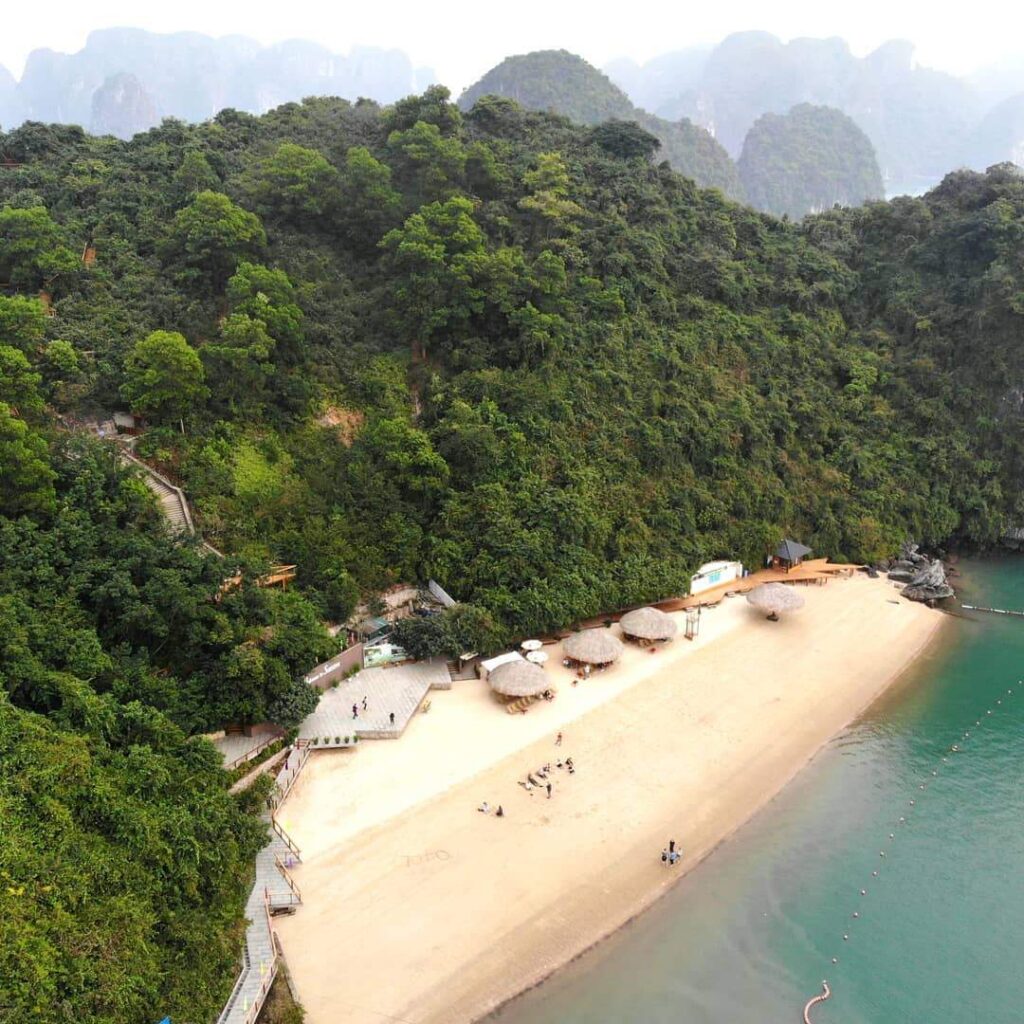
Near Thien Canh Son Cave, guests may find a small natural beach used for short swimming breaks.
This stop is characterized by:
- A peaceful setting
- Clean, calm water
- Very few other boats in sight
Beach time is often paired with a guided cave visit, creating a balanced and unrushed experience.
Ban Chan Beach
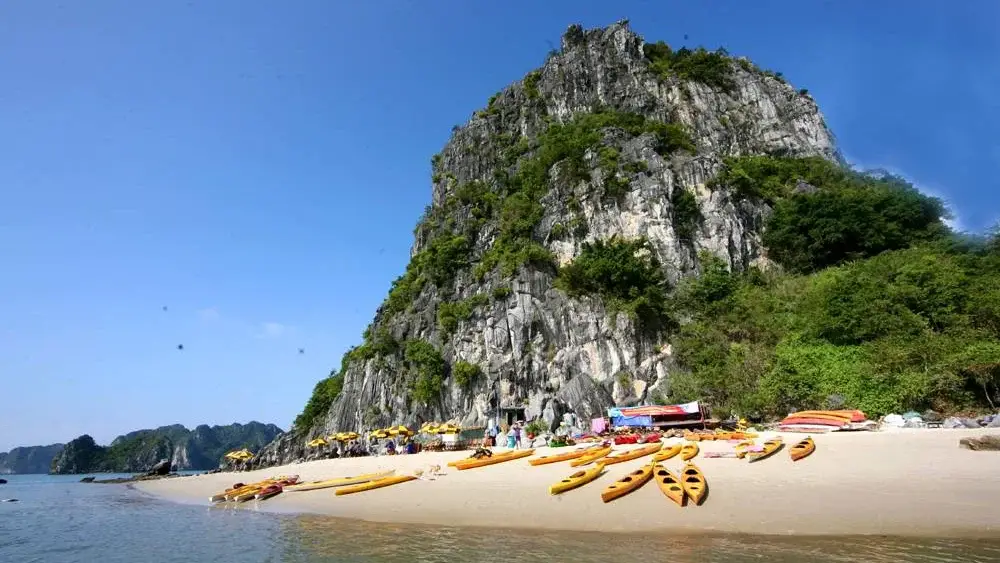
Ban Chan is one of the most appealing natural beaches in Bai Tu Long Bay.
Guests often describe it as:
- Wild and undeveloped
- Quiet and open
- Surrounded by untouched scenery
The water here is typically shallow and calm, making it ideal for relaxed swimming. Ban Chan is especially popular with travelers who prefer solitude and a sense of exploration over iconic landmarks.
How Long Do You Stay at a Cruise Beach?
On a Halong Bay cruise, beach stops typically last 30 to 60 minutes.
The exact duration depends on:
- Weather conditions
- Traffic management by Bay authorities
- The overall itinerary flow
Cruise beaches are meant to refresh and reset the journey, not replace a beach resort experience.
Swimming, Kayaking, or Simply Enjoying the Moment
There is no pressure to do everything at a cruise beach.
Most guests choose one or two simple activities:
- A short swim
- Sitting on the sand
- Light kayaking nearby
Activity options vary depending on wind, water temperature, and time of day. Often, the most memorable moments come from doing very little at all.
Are There Any “Private Beaches” on a Halong Bay Cruise?
This is a common question, especially among luxury travelers.
The honest answer is:
- There are no private beaches in the legal sense on Halong Bay
However, privacy can still be felt because:
- Some beaches are rarely visited
- Certain time slots are much quieter than others
- Boutique cruises operate outside peak congestion
What feels “private” usually comes down to timing, route choice, and scale, rather than exclusivity.
How Beach Stops Work on an Aime’e Cruises Journey
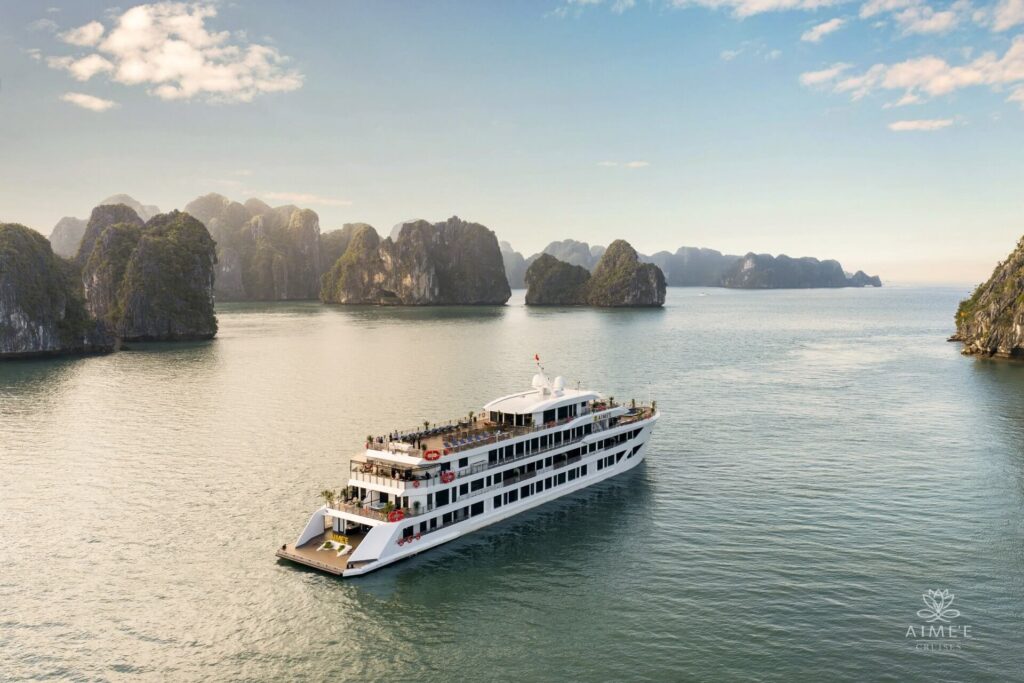
On an Aime’e Cruises itinerary, beach experiences are intentionally spread across the journey, offering guests two very different perspectives of Halong Bay.
Day 1: Titop Island – A Classic Introduction
On the first afternoon, Aime’e Cruises visits Titop Island, one of the Bay’s most iconic beach stops.
By this time of day, the beach can be lively, as many cruises arrive in the afternoon. Rather than avoiding this entirely, Aime’e treats Titop as a classic introduction to Halong Bay.
Guests can expect:
- A refreshing swim at the sandy beach
- Fresh towels prepared and provided on board
- Clear guidance from the tour guide throughout the stop
Guests may choose between:
- Swimming and relaxing on the beach, or
- Climbing to the island’s viewpoint for a panoramic view over Halong Bay’s limestone landscape
The tour guide supports guests at their own pace, ensuring the stop feels organized rather than rushed.
Day 2: Trinh Nu Area – Quieter Waters and Kayaking
On the second day, the atmosphere changes.
Guests board a smaller day boat and head deeper into the Bay toward the Trinh Nu area, where kayaking takes place in calmer, more sheltered waters.
Here, guests experience:
- Fewer boats
- A quieter environment
- A slower, more intimate pace
Kayaking allows guests to:
- Paddle close to limestone cliffs
- Explore at their own rhythm
- Enjoy the natural silence of the Bay
This contrast between the lively first day and the tranquil second day is often one of the most appreciated aspects of the journey.
What Guests Often Expect – and What Surprises Them
Many guests initially expect:
- Large beaches
- Long beach stays
- Resort-style facilities
What often surprises them instead:
- How peaceful short beach stops can feel
- How different island beaches are from mainland ones
- How memorable simple moments—like swimming between limestone cliffs—can be
Cruise Beaches Are About Atmosphere, Not Facilities
Beaches on a Halong Bay cruise are not about sun loungers or beach clubs. They are about:
- Stepping briefly onto an island
- Swimming in calm, protected water
- Experiencing the Bay from a different perspective
From the lively energy of Titop to the quiet waters of Trinh Nu and the untouched shores of Bai Tu Long Bay, each beach adds a distinct layer to the journey.
When travelers understand what cruise beaches truly offer, they stop comparing them to mainland beaches—and begin appreciating them for what they are: simple, natural, and uniquely Halong Bay.