A practical guide to understanding routes, stops, and real cruise operations
Many travelers assume that all cruises in Halong Bay follow the same path. After all, the scenery often looks similar in photos—limestone islands, emerald water, caves, and beaches.
In reality, cruising in Halong Bay is tightly regulated, and routes play a much bigger role in shaping your experience than most guests realize.
This article explains how cruise routes in Halong Bay actually work, why itineraries differ from one cruise to another, and what this means for your time on the Bay.
Halong Bay Is Managed by Fixed Cruise Routes
Halong Bay is not an open sea where cruise ships can move freely. To protect the UNESCO World Heritage landscape and manage traffic, authorities divide sightseeing activities into five official cruise routes.
Each route defines:
- The geographic area a cruise is allowed to operate in
- Which attractions can be visited
- Where ships may anchor during the day and overnight
- How long vessels are allowed to stay at each site
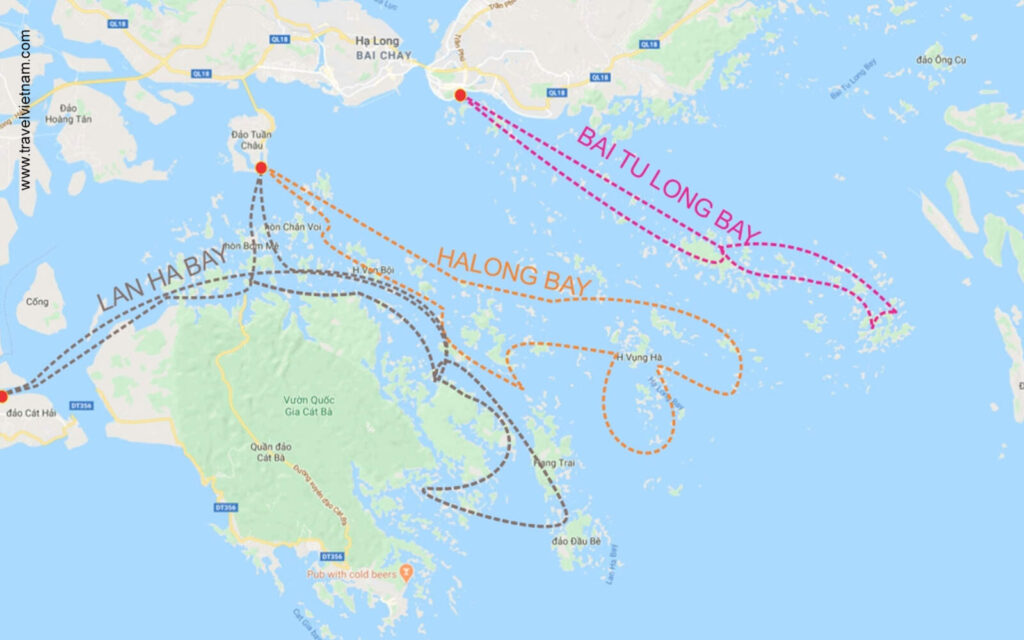
Cruise ships must register their route in advance and are not permitted to visit attractions outside their approved route. This applies to both day cruises and overnight cruises.
Understanding this framework is key to understanding why cruises that look similar on paper can feel very different in practice.
Route 2 – The Central Route of Halong Bay
Among the five routes, Route 2 is widely considered the central route of Halong Bay.
It passes through the core area of the Bay, where many of its most iconic landscapes and attractions are located.
Route 2 is especially popular because:
- It showcases the classic scenery most travelers associate with Halong Bay
- It is suitable for both first-time visitors and overnight cruises
- It includes attractions with well-developed visitor infrastructure
At the same time, Route 2 is one of the most strictly regulated routes, due to high visitor numbers and environmental sensitivity.
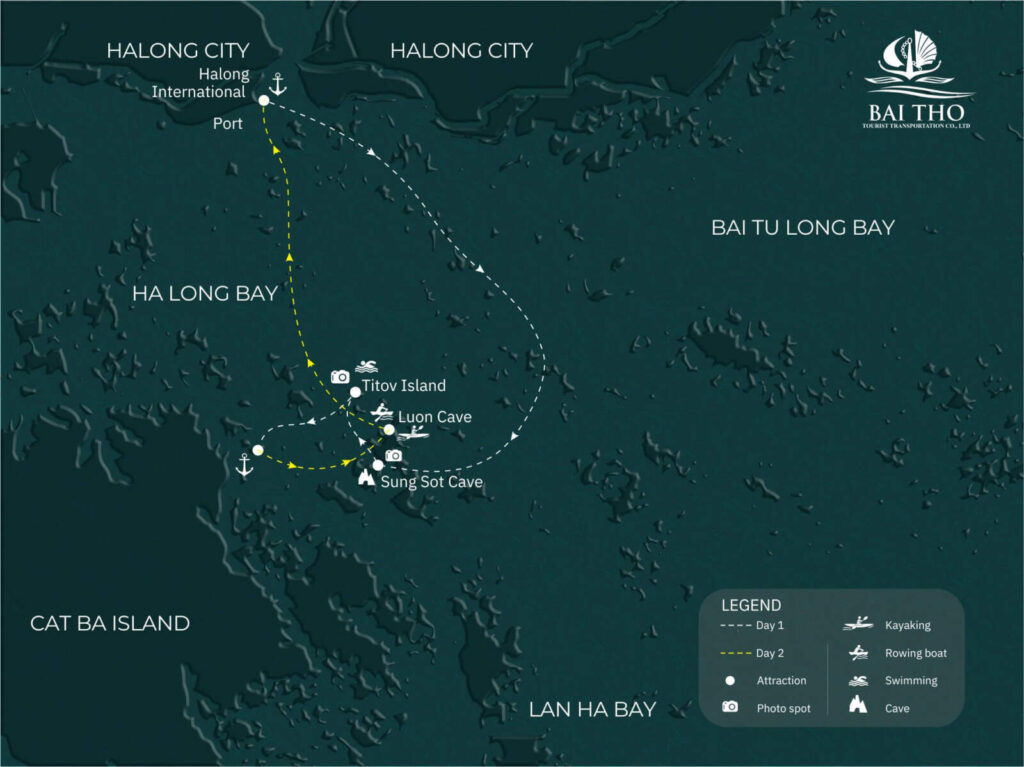
Key Attractions Along Route 2
Depending on the approved itinerary, cruises operating on Route 2 typically visit a selection of the following highlights:
- Soi Sim Island – known for its beach and panoramic viewpoints
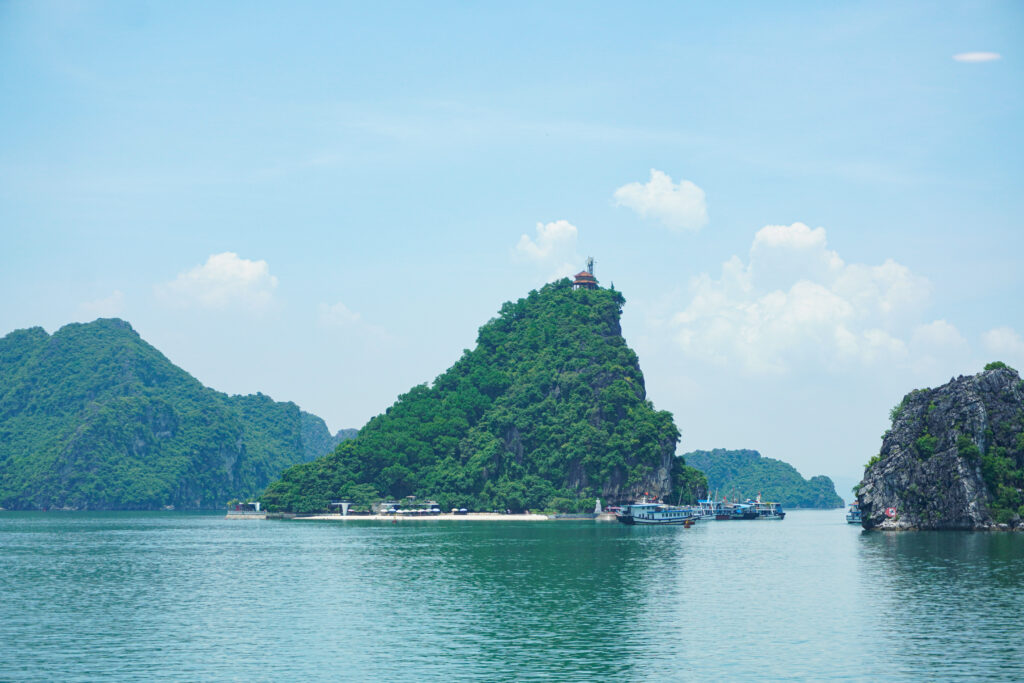
- Titop Island – a crescent-shaped beach and a popular viewpoint over the Bay
- Sung Sot Cave – the largest and most famous cave in Halong Bay
- Luon Cave – accessed by kayak or bamboo boat through a limestone arch
- Me Cung Cave – a smaller cave complex with intricate chambers
These sites represent the “classic” Halong Bay experience and are the reason Route 2 is often described as the heart of the Bay.
Why Not All Cruises Follow the Same Itinerary
Even when cruises operate on the same route, no two itineraries are exactly alike.
This is not random—it reflects how the system is designed.
Licensed routes and approved stops
Each cruise ship operates under a specific license that defines:
- Which route it may sail
- Which attractions it is permitted to visit
- The general time window for those visits
As a result, one cruise on Route 2 may include Sung Sot Cave and Soi Sim Island, while another may focus on Titop Island and Luon Cave instead.
These differences are based on approved operating plans, not last-minute choices.
Flexible sequencing, fixed boundaries
While cruises cannot leave their assigned route, the order of visits is often flexible.
Authorities may adjust schedules to:
- Reduce congestion at popular sites
- Balance visitor flow throughout the day
- Respond to weather or sea conditions
This is why one ship might visit Sung Sot Cave in the morning, while another visits the same cave in the afternoon—even on the same day.
Anchoring Rules: Why Cruises Can’t Stop Anywhere
Anchoring is one of the most tightly controlled aspects of cruising in Halong Bay.
On Route 2, ships are required to:
- Anchor only in designated areas
- Follow assigned positions and spacing
- Observe regulations for both daytime and overnight anchoring
There is no free anchoring. Cruise ships cannot simply stop where the view looks best or where the water seems calm.
From a guest’s perspective, this matters more than expected. Anchoring locations affect:
- How close ships are to one another at night
- Noise levels during evening and early morning hours
- The sense of openness and privacy onboard
Experienced operators plan anchoring times carefully to avoid peak congestion whenever possible.
Real Travel Time Between Attractions
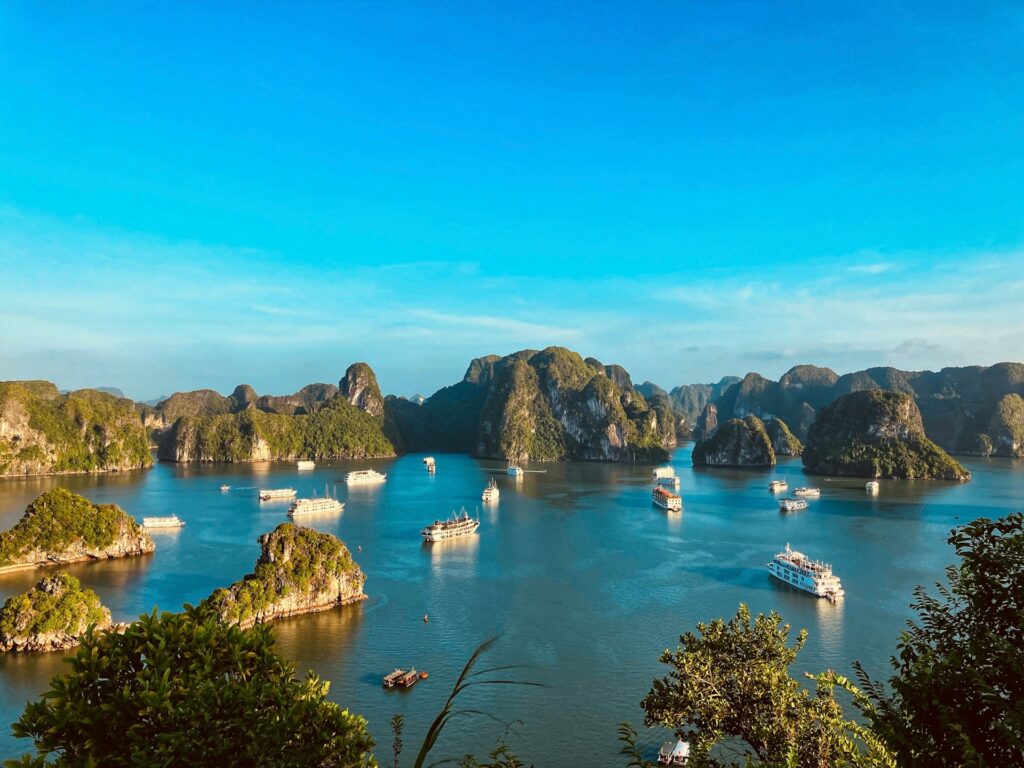
Distances on a map do not tell the full story in Halong Bay.
Actual travel time depends on several factors:
- Speed limits within protected zones
- Traffic density during peak hours
- Tidal currents and wind conditions
For example, moving between Titop Island and Luon Cave may take anywhere from 30 to 60 minutes, depending on conditions.
This variability is why well-designed itineraries allow buffer time instead of trying to pack in too many stops.
Why Some Cruises Feel Rushed
Guests often describe certain cruises as feeling “busy” or rushed, even though they visit the same attractions as others.
This usually happens when:
- Too many stops are scheduled in a short time
- Travel time is underestimated
- Visit windows overlap with peak traffic
In contrast, a thoughtfully planned itinerary focuses less on the number of attractions and more on how time is distributed across the day.
Similar Routes, Different Experiences
At first glance, many Route 2 itineraries look alike.
The difference lies not in the list of attractions, but in:
- The order in which they are visited
- How long the ship stays at each site
- How movement between stops is timed
Two cruises can follow the same route and still deliver very different experiences—one feeling hurried, the other calm and immersive.
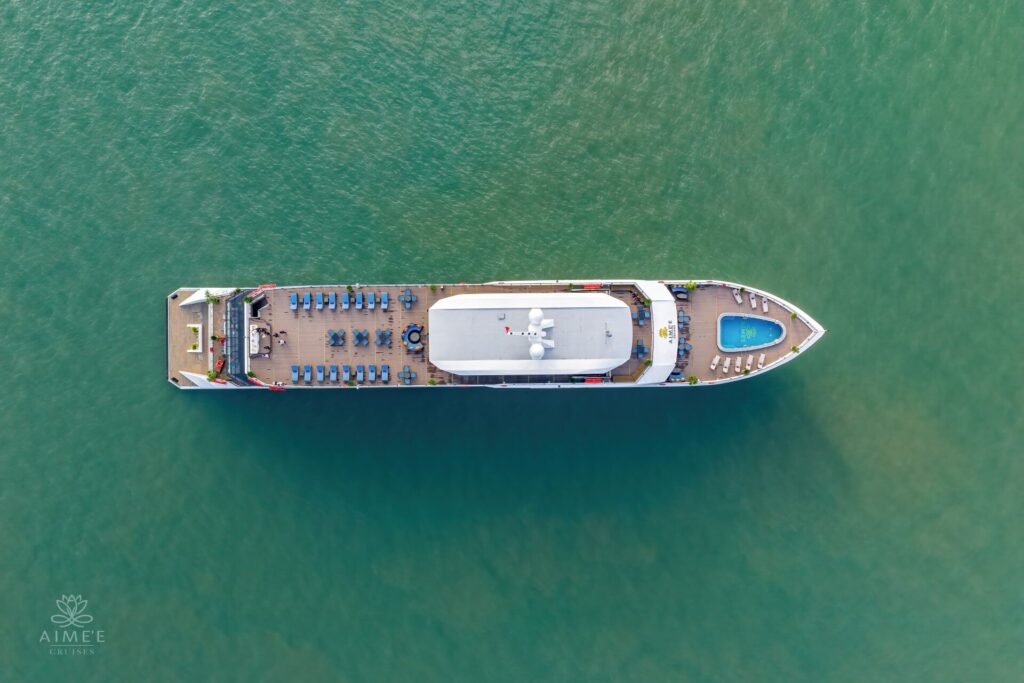
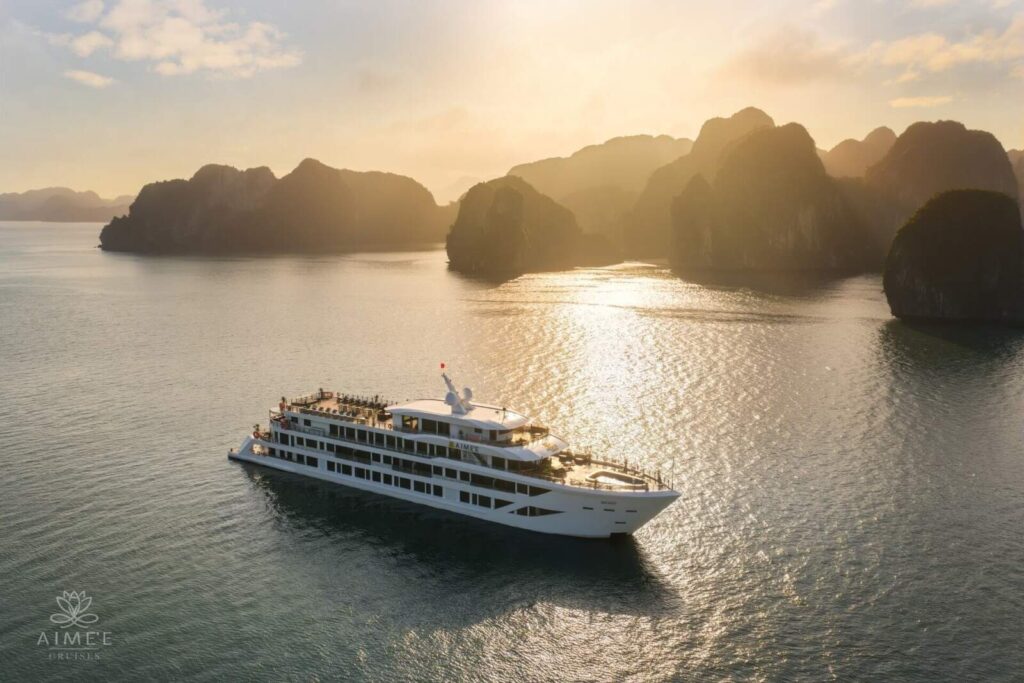
Aime’e Cruises and Route 2
Aime’e Cruises operates on Route 2 by choice.
The central route offers access to Halong Bay’s most iconic landscapes while allowing for a balanced overnight experience.
Rather than maximizing the number of stops, Aime’e’s approach focuses on:
- A measured pace throughout the day
- Thoughtful sequencing of visits
- Avoiding peak congestion whenever possible
The goal is not to see everything, but to experience the Bay in a way that feels unhurried and complete.
As Mr. Tung Nguyen, Captain of Aime’e Cruises, shares:
“On Halong Bay, the route is fixed, but the experience is not. Timing, sequencing, and knowing when to move—or when to wait—make the difference between a rushed cruise and a truly enjoyable one.”
Understanding Routes Helps You Choose the Right Cruise
Cruise routes are not a technical detail—they shape nearly every aspect of your journey.
When travelers understand how routes work, they are better equipped to:
- Read itineraries more accurately
- Set realistic expectations
- Choose a cruise that matches their travel style
In Halong Bay, how you move through the landscape matters as much as where you go.
A well-designed route, executed with experience, can transform a cruise from a checklist of sights into a truly memorable journey.